
Strength Through Strength
Updated: Feb 13
Friday the 13th, February 2026

I could be superstitious about Friday the 13th this year, but since there will be two of them, two months in a row, I’m not a bit concerned about the bad luck.
The bad luck isn’t something I necessarily believe in, although I certainly have a sense of bad karma coming to those who have earned it. It’s the Calvinist (Dutch) in me, but my Scots-Irish ancestry also gains a palpable sense of comeuppance for those snooty miserable sinners.
The past couple of weeks I’ve been fascinated, amused, and astonished by Amelia Victorious. I am SO happy not to be late to the party on this one. In fact, I’d say I’ve been well ahead of this game, having written THE DAWN!
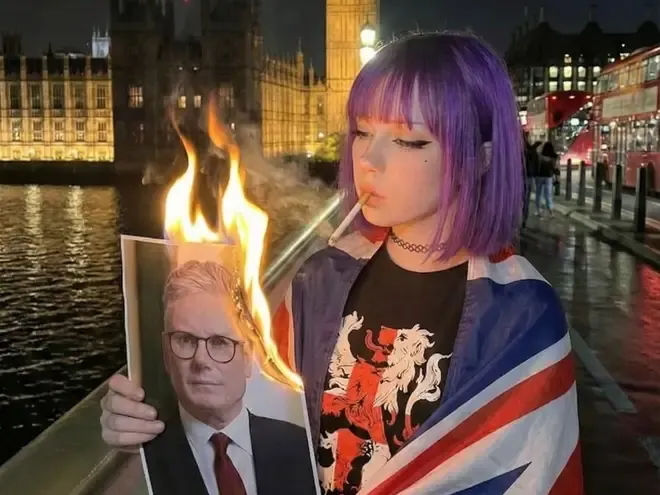
I especially adore Amelia the Braveheart!
She’s not even real and I want to copy her makeup!
To return to more weighty matters, though:
I always say: “If you don’t know WHO is in charge, then you have to find out WHAT is in charge.”
A bottomless pit of depraved corruption is the answer to that one in Old Blighty. We Americans are also busily fumigating those fabulous post-Cold War Years of the fun-fun-fun Holiday from History at the taxpayer’s expense. I am not one of those Yanks fixated upon the X-Rated Files (Epstein); I had to live through/live out the 1990s, and 2000s, raising a family, shielding young eyes and ears, along with those of my own — from grotesqueries masquerading as Governance.

Get Real!
Nostradamus is not in those X-Rated Files, but I daresay his karma is all over them. At this point, the Epstein Files are distracting from the Epstein Files.
Chapter 65 of THE DAWN includes a passage on Charles de Gaulle, during the historic era of rampant nationalism — when he was saving France. I call this section “Strength Through Strength.” It’s the precursor to Peace Through Strength, an oldie-but-goodie that gets trotted out every 30-50 years, when a free nation is on the brink of disaster and civilizational collapse.
It’s hard to be a Super-Hero, in America, in any civilized nation. Didn’t we just clean this mess up? is the standard question of the Super-Hero and the Super-Heroine, anytime, anywhere.
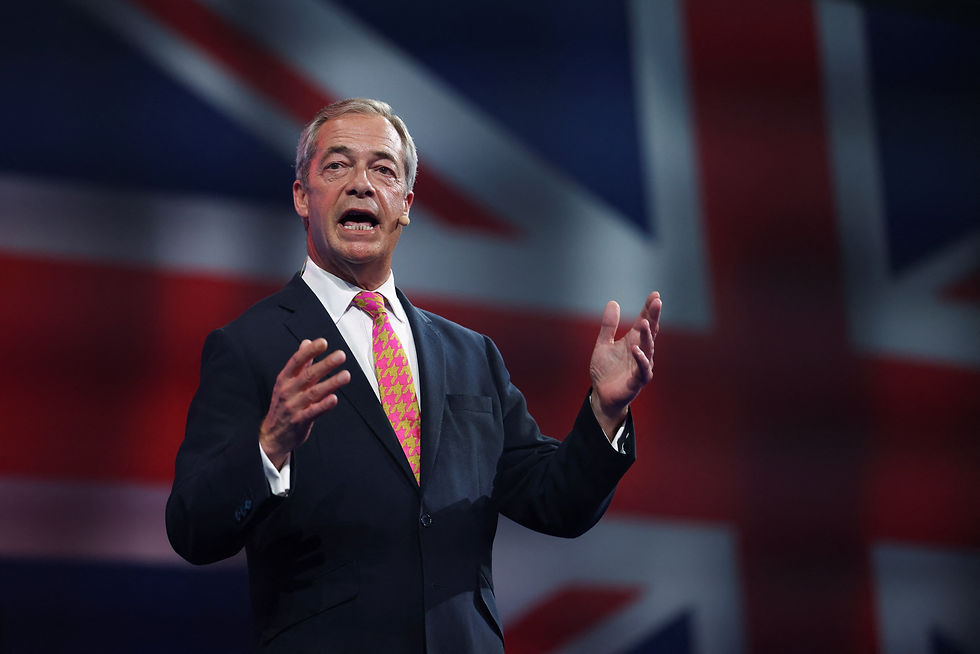
Yes, Amelia, we did. Hitler at the Channel, before bollocks got replaced by bollards in front of buildings that go kaboom-ski, along with the Patriots.
I’ve a feeling The General in London and Amelia the Victorious are of the same stripe. The General in London spent four years trying to get back across that Channel, la Manche, to liberate France.
For all I know, Nigel in London might have to attempt the same feat!
As a writer of fiction, I was gobsmacked to learn about the origin of Amelia, the clumsy creation of a fictional character who was supposed to be the Forced-Fed Digital Propaganda Villainess — and she became the Super Heroine!
She is more than a meme : She’s a movement!

And without MAGA, Amelia might not have come to be. There’s nothing like a nasty-nerd dweeb-dictator Prime Minister, Glitzy-Ignoramus-Governor or Eggplant-Prez to bring out the Robin Hood in all of us.
Welcome to Sherwood, my mateys!
From Chapter 65 of THE DAWN:
The ideology of Charles de Gaulle, if indeed there was one, was pragmatism. His tenet in life, and in that unpleasant arena known as politics, asserted that a leader, if he expects to succeed, must be capable of adapting, and willing to adapt -- to circumstances, however and whenever they change. His basic goal in life and in politics was the defense of France. He judged any and all governments of France (and there had been many) on the basis of how well that regime added to the greatness of France: this greatness was predicated upon military strength.

During his first weeks and months as the voice of the Free French, this glorious intonation that came to les Français from the BBC in London, General de Gaulle used these words to open the appel: “honour et patrie,” honour and homeland. The motto of the French republic, “Liberté, Égalité, Fraternité,” Liberty, Equality, Fraternity, was eschewed until late in 1941. The avoidance of this motto was not due to any vitriol or disdain which General de Gaulle held for republicanism. He was a strong believer in democracy and in the republican form of governance. He maintained, nonetheless, a huge amount of vitriol and disdain for the Third Republic of France.

His most scathing sentiments were reserved for and aimed at the failures, abuses, decadence, and overall impotence of La Troisième République. This government had endured for 70 years, which was an amazing achievement in French history. Its longevity, however, came with a vicious price tag; and its finale was, in a word, historic. Charles de Gaulle knew well the costs of this stability to the people of France. Even the French people had to admit that their now-deceased Third Republic had been a series of disasters which had been interrupted only by mediocrity and apathy and the occasional riot that kept the blood flowing in French politics. The people of France, however, did not want a dictatorship, although that beast was precisely what they faced in the Vichy regime.
Charles de Gaulle viewed the Vichy government, a puppet state, as a direct result of the fecklessness of the Third Republic. He dared not openly criticize it on the airwaves, but he privately detested it. He was moreover faced with a true political dilemma:
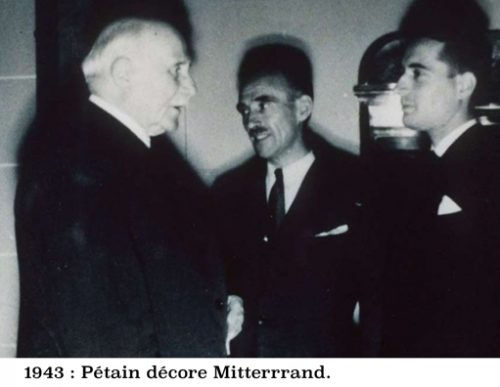
How did this French leader divorce his image and persona from the deservedly maligned Third Republic of France unless he stiff-armed allusions to republicanism? These references to republicanism were, however, crucial in aligning this neophyte leader with the one true France, la France libre, and with democracy and republicanism. Consequently, in the early months of establishing the Free French Forces, Charles de Gaulle targeted a far broader audience by standing back and away, far far away, and above the Third Republic, this weak government which had taken a single bullet to the heart from the Vichy regime.
If, as a result of this conscious strategy, General de Gaulle alienated staunch adherents of democracy, many of whom were resisters, it was only to attract a greater base of support from the French people. After receiving all of the abuses from their own political and military leaders, les Français were of the sound opinion that the failed Third Republic deserved to fail. In the minds of the French, this final form of government prior to the Fall of France was inextricably linked with democracy. For a lengthy period of time, the words, “Third Republic” and “democracy” were interchangeable to the French. General de Gaulle wisely decided to use that time, and distance from France, to rebuild the concepts of democracy and republicanism.
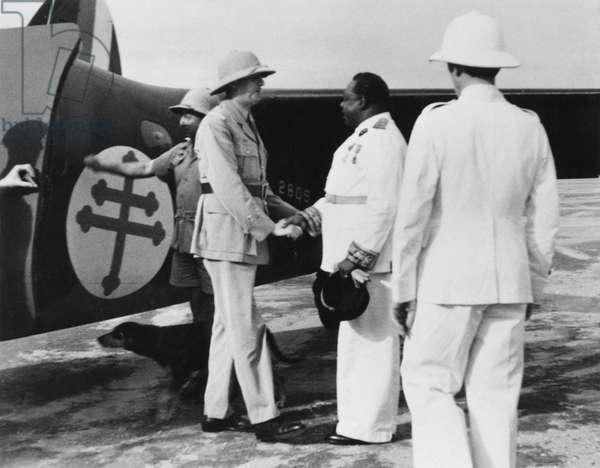
His definitions would eventually prevail, although he too would have to wait for the French people to make their choice as to exactly what constituted the best government in France. It was far better for this astute leader of the Free French Forces to start from scratch, and with a blank slate, when it came to positioning his own thoughts, feelings, policies, and, inevitably, politics. He had vowed in Brazzaville in October 1940 that the French people, women, as well as men, would determine their own form of government after their liberation from the occupying enemy. Beginning in 1942, the use of the word, “revolution,” appears in the speeches and writings of this Frenchman. It did not take long for that word to dominate the text.
To Americans, this General in London relayed the message that he was “a firm partisan of democratic principles.” He understood that his public image in the world had to be one of forthright leadership as a bold adherent to democracy and republicanism. He knew that his job as the renegade leader of the Free French was to restore belief in a free France; that credence had to begin with people outside of this nation.

La lutte, the fight, to restore faith in France also had to occur within France. Sadly, de Gaulle understood that the elites of France had lost their faith in a free France, and in the destiny and the grandeur of France. The elites of France had abandoned la patrie. General de Gaulle knew that he would never abandon France. His allegiance to her compelled him to embrace all strata of society to regain her liberation. This approach, in and of itself, was revolutionary for France.


